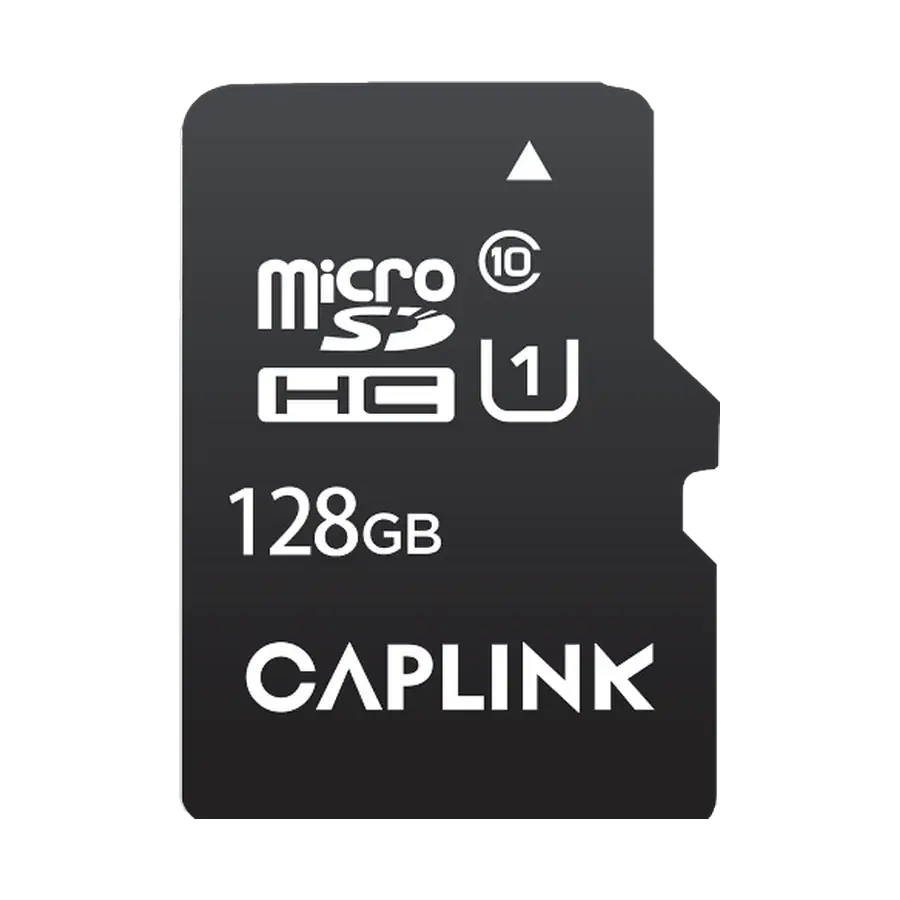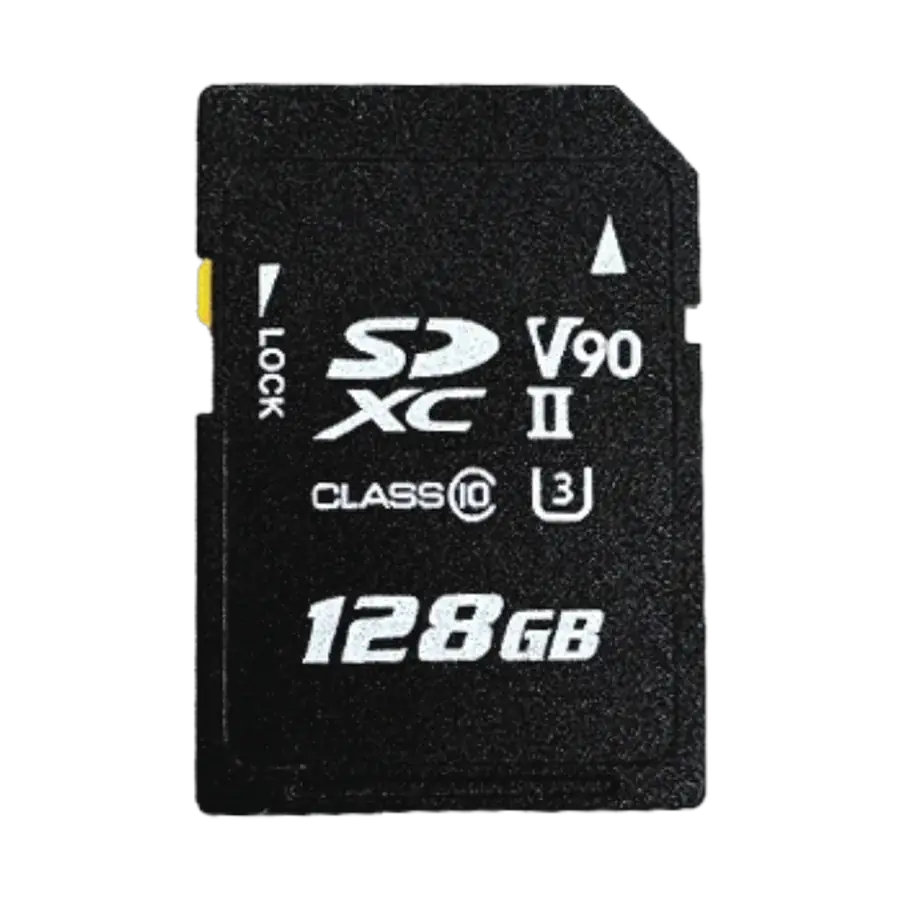
Memory cards look identical from the outside, but the small symbols on the label decide whether a dashcam records without gaps, a camera keeps up with 4K video, or a phone runs apps from the card smoothly. Most returns in this category come from the wrong card for the device, not from faulty cards.
This guide explains the speed classes in plain terms and gives buyers a device-by-device recommendation.
Card types and capacities
| Family | Capacity range | Default file system | Notes |
|---|---|---|---|
| SD / microSD (SDSC) | up to 2 GB | FAT16 | Legacy only |
| SDHC | 4–32 GB | FAT32 | Accepted by almost every device |
| SDXC | 64 GB–2 TB | exFAT | Needs SDXC support in the device |
Full-size SD cards go into cameras, audio recorders and laptops. microSD (TF) cards go into phones, tablets, dashcams, CCTV cameras, drones, action cameras and the Nintendo Switch — and can be used in SD slots with an adapter.
The speed symbols explained
| Symbol | Meaning | Minimum sustained write |
|---|---|---|
| Class 10 (C in a circle) | Original speed class | 10 MB/s |
| U1 (1 in a U) | UHS speed class 1 | 10 MB/s |
| U3 (3 in a U) | UHS speed class 3 | 30 MB/s |
| V10 / V30 / V60 / V90 | Video speed class | 10 / 30 / 60 / 90 MB/s |
| A1 | App performance class 1 | 1,500 read / 500 write IOPS + 10 MB/s |
| A2 | App performance class 2 | 4,000 read / 2,000 write IOPS + 10 MB/s |
Two more marks describe the bus, not the guaranteed write speed:
- UHS-I (Roman numeral I) – one row of contacts, bus up to 104 MB/s. Most microSD cards.
- UHS-II (II, second row of contacts) – bus up to 312 MB/s. Professional SD cards for cameras; our SD cards reach up to 300 MB/s read in UHS-II devices.
The "up to 100 MB/s" printed on many cards is a maximum read speed. The speed class (U3, V30…) is the minimum write speed — the number that matters for video recording.
How much recording time fits on a card?
Use this formula: GB per hour ≈ video bitrate in Mbps × 0.45.
| Device / setting | Typical bitrate | GB per hour | Hours on 64 GB | Hours on 128 GB |
|---|---|---|---|---|
| CCTV 1080p H.265 | 2 Mbps | ~0.9 | ~70 | ~140 |
| CCTV 4MP H.265 | 4 Mbps | ~1.8 | ~35 | ~70 |
| Dashcam 1080p | 12 Mbps | ~5.4 | ~11 | ~23 |
| Dashcam 4K / front + rear | 25–30 Mbps | ~11–14 | ~4.5–5.5 | ~9–11 |
| Action camera 4K | 60–100 Mbps | ~27–45 | ~1.5–2.3 | ~3–4.5 |
Dashcams and CCTV cameras loop-record, so the card is overwritten continuously. Bigger capacity means each area of the card is rewritten less often, which also extends card life.
Which card for which device
| Device | Recommended card | Capacity | Why |
|---|---|---|---|
| Dashcam | microSD U3 / V30, high-endurance | 64–256 GB | Continuous writing, heat in the car |
| CCTV / IP camera / doorbell | microSD U1–U3, high-endurance | 64–256 GB | 24/7 recording at low bitrate |
| Action camera / drone 4K | microSD U3 / V30 (V60 for high bitrate) | 128–256 GB | High bitrate video, no dropped frames |
| Mirrorless / DSLR camera | SD V30 for 4K, V60–V90 UHS-II for 6K/8K and fast bursts | 64–512 GB | Fast sustained write, buffer clearing |
| Android phone / tablet | microSD A1 or A2, U3 | 128–512 GB | Apps and photos on the card |
| Nintendo Switch | microSDXC U3, A1 | 256–512 GB | Game loading; Switch needs SDXC support |
| Raspberry Pi / IoT devices | microSD A1, U1–U3 | 32–64 GB | Random reads for the operating system |
| Car audio, speakers, MP3 | microSD / SD Class 10 | 16–64 GB | Low demands; check FAT32 support |
Why some cards fail early in dashcams and CCTV
Continuous recording is the hardest workload for flash memory: every hour the card writes gigabytes of new data, often at 60–70 °C inside a car in summer. Ordinary cards designed for phones and cameras can wear out within months. For these devices choose:
- 3D TLC or MLC NAND rather than QLC (see TLC vs QLC NAND); our SD cards use 3D MLC / TLC.
- High-endurance cards rated for continuous recording hours.
- Larger capacity than the minimum, so wear is spread out.
- Regular formatting in the device itself every few weeks.
Wholesale tips for card buyers
- Sell by device, not only by capacity. Listings titled "microSD for dashcam 128GB V30" convert better and get fewer returns than generic "128GB memory card".
- Stock the best-selling capacities: 64 GB and 128 GB for dashcams and CCTV, 128–256 GB for phones and the Switch, 256–512 GB for cameras.
- Test every new batch for real capacity with H2testw or f3 and for sustained write speed. Fake-capacity cards are common in this category — see how to spot fake SSDs and memory cards.
- Ask for batch numbers and test reports with each shipment; ours are available on request.
- Bundle accessories such as SD adapters and card readers to raise order value.
Need cards with your own brand? Private label cards with custom labels and retail packaging are available — see OEM & private label. For larger portable storage, see our portable SSD wholesale guide; for branded giveaways, our custom logo USB flash drive guide.
Summary
Match the speed class to the bitrate and the endurance to the workload: V30 for 4K, high-endurance cards for dashcams and CCTV, A1/A2 for phones, UHS-II V60–V90 for professional cameras. Use the bitrate formula to size capacity, and test every batch. Browse our memory card range or ask for a quotation.