Memory cards for dash cams and security cameras are one of the highest-return products in the memory card category. Not because the cards are fake, but because a standard card meets a workload it was never designed for: continuous recording, constant overwriting and heat. For distributors, installers and online sellers, choosing the right card type is the difference between repeat customers and a stream of "card error" complaints.
Why recording workloads are different
| Phone / camera use | Dash cam / CCTV use | |
|---|---|---|
| Writing | Occasional photos and apps | 24/7 continuous video |
| Overwriting | Rare | Constant loop recording |
| Temperature | Pocket or room temperature | Car windscreen or outdoor housing, hot and cold |
| What matters | Random speed (A1/A2), burst speed | Sustained write speed and endurance |
A card in a dash cam can be fully rewritten every day. Over a year that is hundreds of complete write cycles — more than many ordinary cards are designed for.
Speed classes that matter for video
| Marking | Minimum sustained write | Suitable for |
|---|---|---|
| Class 10 / U1 | 10 MB/s | 1080p single-channel recording |
| U3 / V30 | 30 MB/s | 2K and 4K, front + rear dual-channel |
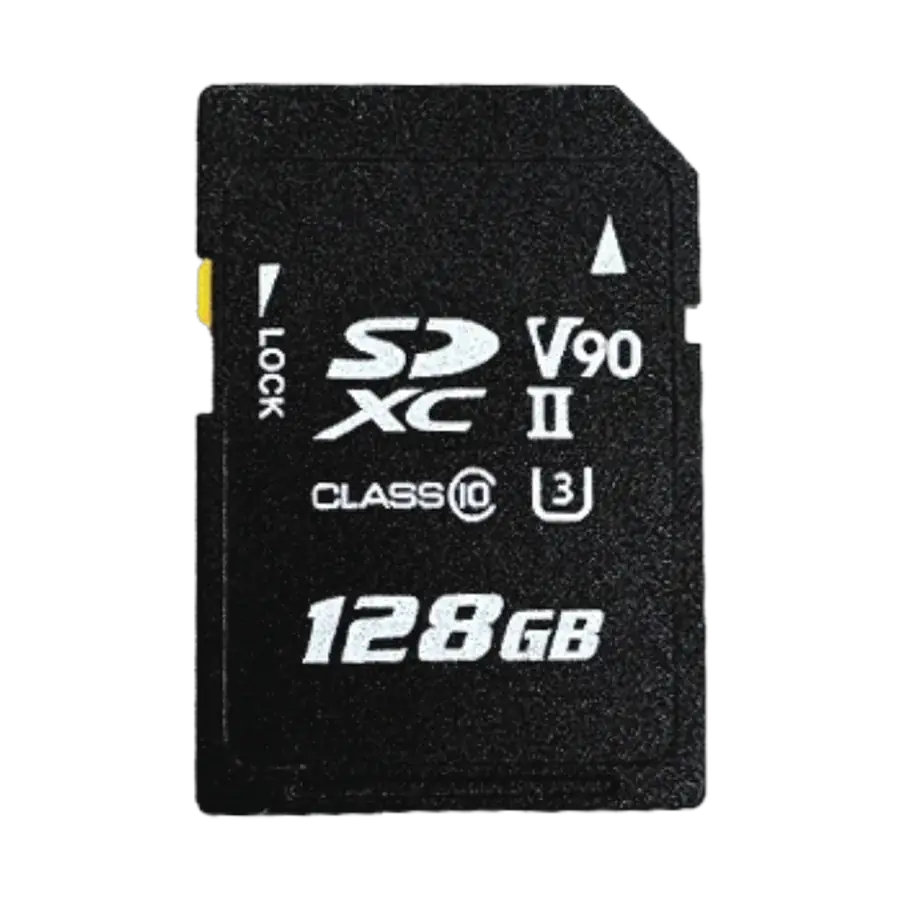
| V60 / V90 | 60 / 90 MB/s | Professional cameras (rarely needed for dash cams) |
| A1 / A2 | App performance | Phones and consoles — not a recording rating |
For a full explanation of the markings, see our SD and microSD speed class guide.
Capacity vs recording time
Recording time depends on the camera's bitrate. These are typical figures; check the actual bitrate of your models.
| Capacity | 1080p (~12 Mbps) | 2K (~18 Mbps) | 4K (~25–30 Mbps) |
|---|---|---|---|
| 32GB | ~5.5 hours | ~3.5 hours | ~2.5 hours |
| 64GB | ~11 hours | ~7.5 hours | ~5 hours |
| 128GB | ~21 hours | ~15 hours | ~9–10 hours |
| 256GB | ~42 hours | ~30 hours | ~19–20 hours |
Bigger cards also last longer: with more capacity, each part of the card is overwritten less often, so wear is spread out. For dash cams, 64–128GB is the sweet spot; for security cameras that record continuously, 128–256GB where the camera supports it.
High-endurance cards: what to look for
"High endurance" is not a formal standard, so compare the actual specifications:
- Rated recording hours or TBW — a meaningful endurance figure, not just "for dash cams".
- NAND type and grade — TLC from a known source is the baseline; better grades last longer.
- Operating temperature — cards for cars should cover hot summer parking and winter cold; check the rated range.
- Warranty terms for continuous recording — some standard card warranties exclude dash cam and CCTV use.
- Sustained write speed — U3 / V30 at least for 2K and 4K.
We supply microSD cards from 16GB to 1TB with U1 and U3 ratings, and SD cards up to V90. Tell us the camera model, resolution and recording mode, and we will confirm which NAND and endurance options fit your project.
Format and compatibility tips
- 32GB and below ship as FAT32 (SDHC); 64GB and above use exFAT (SDXC). Some older dash cams only support FAT32, so they reject 64GB+ cards unless reformatted in the camera.
- Always format in the device before first use and every few months — it resets the file system the camera expects.
- Check the maximum capacity for each camera model before selling large cards.
- Avoid "hidden" fake capacity — test incoming batches with H2testw or F3; see how to spot fake memory cards.
Advice for installers and online sellers
- Sell cards as a bundle with dash cams and cameras — the right card from day one prevents most complaints.
- Put capacity, speed class and use in the title: "microSD 128GB U3 V30 for Dash Cam and Security Camera".
- Explain loop recording on the listing so buyers know the card is meant to be overwritten.
- Recommend replacement every 1–2 years for 24/7 security cameras, and keep the warranty terms clear.
- For devices you design yourself, consider soldered storage instead of a card — see eMMC and our eMMC vs UFS vs SSD guide.
Custom-branded cards with your logo and retail packaging are available through our OEM service, and every batch goes through capacity and speed testing — see our quality control.
Summary
Dash cams and security cameras need cards built for continuous writing: U3 / V30 speed for higher resolutions, enough capacity to spread wear, a temperature range that matches the installation and warranty terms that cover recording. Match capacity to each camera's limit, format in the device and test incoming batches. Request a quotation with your camera models and quantities.